
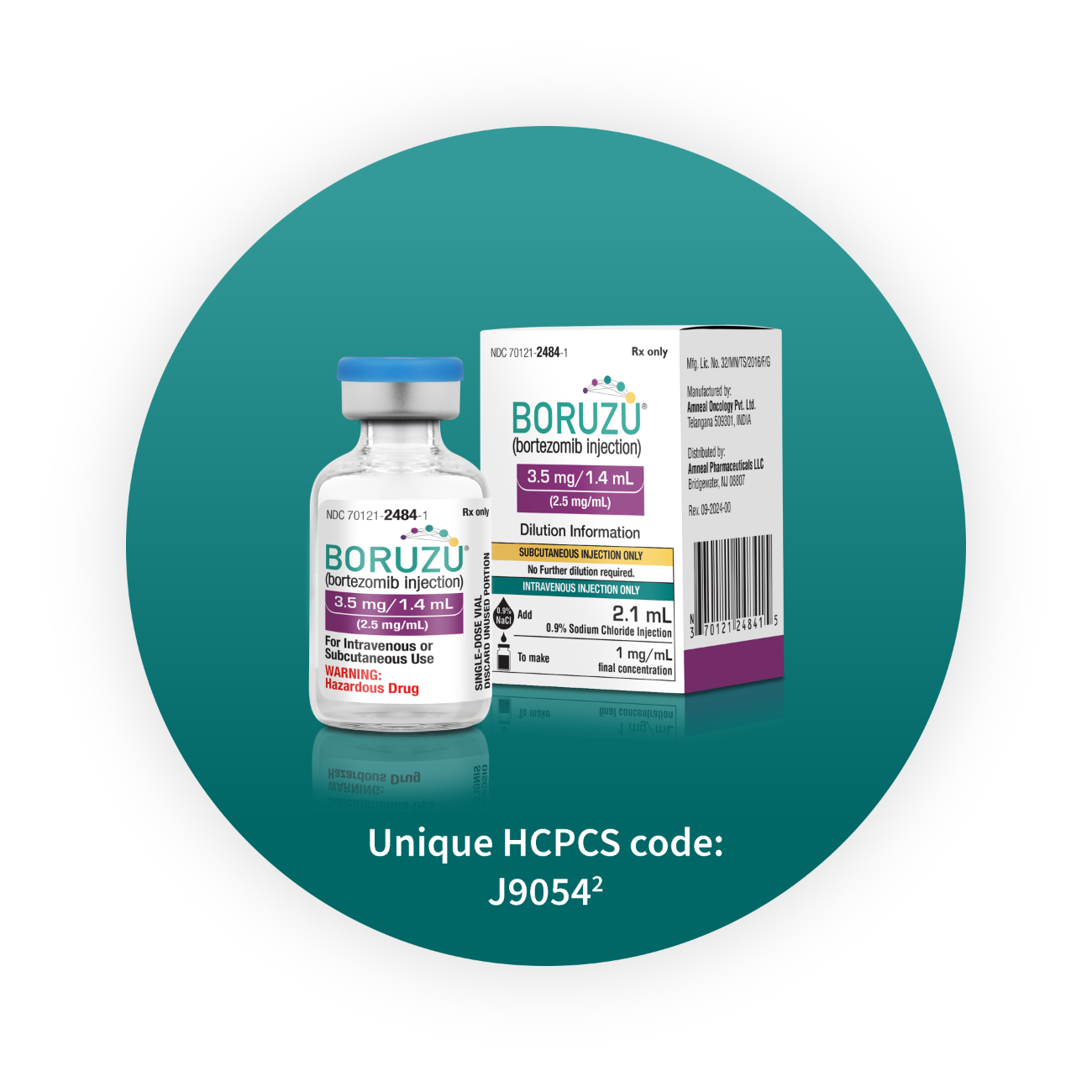
* BORUZU® is supplied as a ready-to-use solution for subcutaneous use in patients with multiple myeloma and needs to be diluted for IV use. The correct route of administration depends on indication and other factors.1,3 Click here for more information.
HCPCS, Healthcare Common Procedure Coding System; IV, intravenous.
References: 1. BORUZU. Prescribing information. Amneal Pharmaceuticals LLC; 2025. 2. Centers for Medicare & Medicaid Services. Fourth quarter, 2024 HCPCS coding cycle. Accessed January 14, 2025. https://www.cms.gov/files/document/2024-hcpcs-application-summary-quarter-4-2024-drugs-and-biologicals.pdf 3. Referenced with permission from the NCCN Clinical Practice Guidelines in Oncology (NCCN Guidelines®) for Multiple Myeloma V.5.2026. © National Comprehensive Cancer Network, Inc. 2026. All rights reserved. Accessed June 25, 2026. To view the most recent and complete version of the guideline, go online to NCCN.org.
BORUZU is for subcutaneous or intravenous use only. Because each route of administration has a different final concentration, caution should be used when calculating the volume to be administered.
Peripheral Neuropathy: Bortezomib treatment causes a peripheral neuropathy that is predominantly sensory; however, cases of severe sensory and motor peripheral neuropathy have been reported. Patients with pre-existing symptoms (numbness, pain or a burning feeling in the feet or hands) and/or signs of peripheral neuropathy may experience worsening peripheral neuropathy (including ≥ Grade 3) during treatment with bortezomib. Patients should be monitored for symptoms of neuropathy, such as a burning sensation, hyperesthesia, hypoesthesia, paresthesia, discomfort, neuropathic pain or weakness. Starting bortezomib subcutaneously may be considered for patients with pre-existing or at high risk of peripheral neuropathy.
Patients experiencing new or worsening peripheral neuropathy during bortezomib therapy may require a decrease in the dose and/or a less dose-intense schedule. The long-term outcome of peripheral neuropathy has not been studied in mantle cell lymphoma.
Hypotension: Treatment with BORUZU may cause hypotension. Patients with a history of syncope, patients receiving medications known to be associated with hypotension, and patients who are dehydrated may be at increased risk of hypotension. Management of orthostatic/postural hypotension may include adjustment of antihypertensive medications, hydration, and administration of mineralocorticoids and/or sympathomimetics.
Cardiac Toxicity: Acute development or exacerbation of congestive heart failure and new onset of decreased left ventricular ejection fraction have occurred during bortezomib therapy, including reports in patients with no risk factors. Patients with risk factors for, or existing heart disease should be frequently monitored. There have also been isolated cases of QT-interval prolongation in clinical studies, although causality has not been established.
Pulmonary Toxicity: Acute Respiratory Distress Syndrome (ARDS) and acute diffuse infiltrative pulmonary disease of unknown etiology such as pneumonitis, interstitial pneumonia, and lung infiltration have occurred in patients receiving BORUZU. Some of these events have been fatal. In the event of new or worsening cardiopulmonary symptoms, consider interrupting bortezomib until a prompt and comprehensive diagnostic evaluation is conducted.
Posterior Reversible Encephalopathy Syndrome (PRES): PRES has occurred in patients receiving BORUZU which can present with seizure, hypertension, headache, lethargy, confusion, blindness, and other visual and neurological disturbances. Brain imaging, preferably MRI (Magnetic Resonance Imaging), is used to confirm the diagnosis. In patients developing PRES, discontinue BORUZU. The safety of reinitiating BORUZU therapy in patients previously experiencing PRES is not known.
Gastrointestinal Toxicity: BORUZU treatment can cause nausea, diarrhea, constipation, and vomiting, which may require the use of antiemetic and antidiarrheal medications. Ileus has also been reported. Fluid and electrolyte replacement should be administered to prevent dehydration, and BORUZU should be interrupted for severe symptoms.
Thrombocytopenia/Neutropenia: Bortezomib is associated with thrombocytopenia and neutropenia that follow a cyclical pattern with nadirs occurring following the last dose of each cycle and typically recovering prior to initiation of the subsequent cycle. Monitor complete blood counts (CBC) frequently during treatment and assess platelet counts prior to each dose of BORUZU. If thrombocytopenia develops, adjust the dose/schedule as outlined in the full prescribing information. Gastrointestinal and intracerebral hemorrhage have been reported in association with thrombocytopenia during BORUZU treatment. Manage patients with transfusions and supportive care according to published guidelines.
Tumor Lysis Syndrome: Tumor lysis syndrome has been reported with BORUZU therapy. Patients at risk of tumor lysis syndrome are those with high tumor burden prior to treatment. Monitor patients closely and take appropriate precautions.
Hepatic Toxicity: Cases of acute liver failure have been reported in patients receiving multiple concomitant medications and in those with serious underlying medical conditions. Other reported hepatic reactions include hepatitis, increases in liver enzymes, and hyperbilirubinemia. Interrupt BORUZU therapy to assess reversibility. There is limited rechallenge information in these patients.
Thrombotic Microangiopathy: Cases, sometimes fatal, of thrombotic microangiopathy, including thrombotic thrombocytopenic purpura/hemolytic uremic syndrome (TTP/HUS), have been reported in the postmarketing setting in patients who received bortezomib. Monitor for signs and symptoms of TTP/HUS and if the diagnosis is suspected, stop bortezomib and evaluate. If the diagnosis of TTP/HUS is excluded, consider restarting bortezomib. The safety of reinitiating bortezomib therapy in patients previously experiencing TTP/HUS is not known.
Embryo-Fetal Toxicity: Bortezomib can cause fetal harm when administered to a pregnant woman. Advise females of reproductive potential to use effective contraception during treatment with BORUZU and for seven months following treatment. Advise males with female partners of reproductive potential to use effective contraception during treatment with BORUZU and for four months following treatment. If BORUZU is used during pregnancy or if the patient becomes pregnant during BORUZU treatment, the patient should be apprised of the potential risk to the fetus.
To report SUSPECTED ADVERSE REACTIONS, contact Amneal Global Patient Safety at 1-877-835-5472 or the FDA at 1-800-FDA-1088 or www.fda.gov/medwatch.